
Aggressive Prostate Cancer Caught Early:
What Jeremy Clarkson’s Diagnosis Tells Every Man
Medically reviewed by Mr Maneesh Ghei, Consultant Urological Surgeon (GMC: 5208045)

An aggressive prostate cancer can still be caught early and that distinction is the single most important thing every man in the UK needs to understand right now. In the Season 5 finale of Clarkson’s Farm, broadcast on 25 June 2026, Jeremy Clarkson revealed he had been diagnosed with an aggressive prostate cancer that was still in its earliest stages. He had no symptoms - a blood test picked it up and an MRI then confirmed it, and he is now in remission.
His own words say it best. “It’s just a blood test these days. If I hadn’t got myself checked out and they hadn’t caught the problem early, this could well have been my last harvest.” Around 10,000 to 12,000 men die from prostate cancer in the UK each year and many of those deaths are avoidable.
Key Takeaways
- “Aggressive” describes how fast a prostate cancer grows, while “Early” describes how far it has spread - the two terms are independent and a cancer can be both
- Aggressive cancers are graded using the Gleason and Grade Group systems. Jeremy Clarkson described his cancer as aggressive but caught really early, and said it was still contained within the prostate when diagnosed
- Most early prostate cancers have no symptoms and a PSA blood test is the only reliable way to pick them up before they spread
- The UK government accepted a targeted screening recommendation in June 2026 but there is still no universal NHS programme, which means private testing is the only way most men can get screened proactively
- Private PSA testing is available in London with no GP referral and same-week appointments
What Does Aggressive Prostate Cancer Actually Mean?
“Aggressive” is a word the media uses loosely, however in clinical urology it has a precise meaning - it describes how quickly a cancer is likely to grow and spread, based on what the cells look like under a microscope.
When a biopsy is taken, a Pathologist examines the tissue and assigns it a Gleason score - the score grades the 2 most common cell patterns in the sample, each from 1 to 5, which are then added together to give a total Gleason score between 6 and 10. The higher the number, the more abnormal the cells and the faster the cancer is likely to behave.
Most Urologists now use the Grade Group system which translates Gleason scores into 5 clearer categories:
| Grade Group | Gleason Score | Behaviour |
|---|---|---|
| 1 | 6 | Low risk, often slow growing |
| 2 | 7 (3+4) | Intermediate, favourable |
| 3 | 7 (4+3) | Intermediate, unfavourable. Treated as aggressive |
| 4 | 8 | High risk, aggressive |
| 5 | 9 or 10 | Very high risk, very aggressive |
Clarkson described his cancer as aggressive but caught really early, and said it was still contained within the prostate when diagnosed. He has not publicly disclosed a specific Gleason score or Grade Group. An aggressive cancer found while still contained within the prostate is highly treatable, which is why his outcome has been positive.
How Can A Cancer Be Aggressive And Early At The Same Time?
This is the part that confuses most men and it is also the part that gives the Clarkson story its power - the two terms answer different questions.
“Aggressive” answers: how fast is this cancer likely to grow?
“Early” answers: how far has it spread already?
A cancer is called early stage when it is still confined within the prostate capsule, which is the thin layer of tissue around the gland. At this point it has not invaded surrounding tissue, the seminal vesicles, lymph nodes, bones or distant organs and treatment, whether surgery or radiotherapy, has the best chance of removing or destroying it completely.
An aggressive cancer caught early is still curable in most cases whereas an aggressive cancer caught late often is not. The difference between the two is timing and timing is entirely determined by when you test.
What Did Jeremy Clarkson Actually Have Done?
The pathway he described is the same pathway every private prostate Patient at Urocare London follows - it is the modern UK best-practice pathway, set out in NICE guideline NG131 and used in every major private clinic in London.
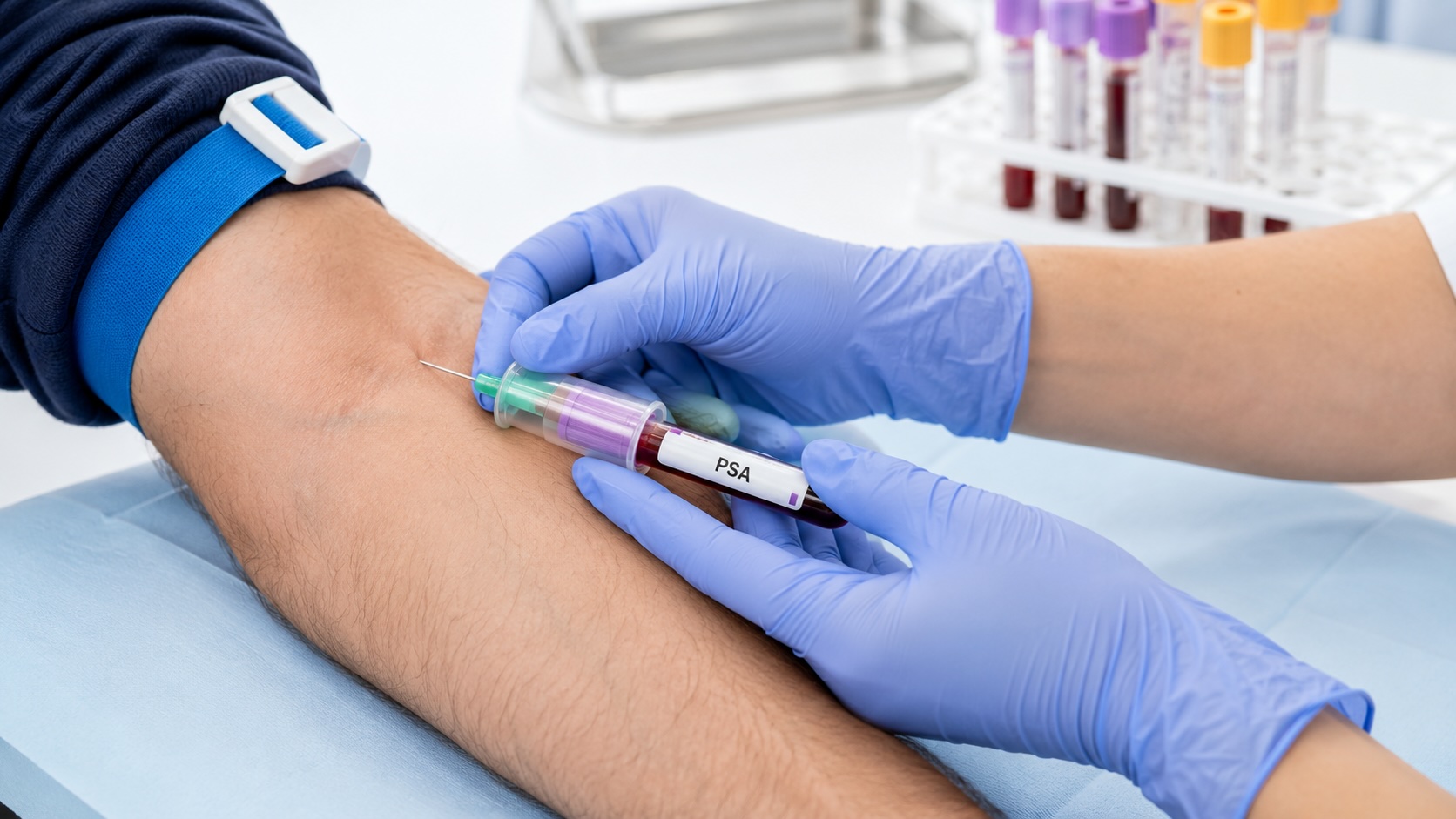
- PSA blood test - a simple blood sample, measured in nanograms per millilitre which takes 5 minutes in clinic, with results back within 2 to 3 working days. See our guide on PSA test preparation for what to do in the 48 hours before
- Multiparametric MRI scan - if PSA raises concern, an MRI of the prostate produces detailed images that grade any suspicious area or lesion on the PI-RADS scale of 1 to 5
- Targeted biopsy - only if the MRI flags a suspicious area, a biopsy is performed under local anaesthetic to take small tissue samples from the specific spot the MRI identified
- Gleason scoring and staging - the biopsy tissue is examined to grade the cancer and determine whether it remains contained in the prostate
- Treatment decision - based on the grade, stage, your age and your preferences, you choose between active surveillance, surgery (radical prostatectomy), radiotherapy, hormone therapy or a combination
Clarkson said an MRI flagged the lesion and a biopsy confirmed it, and he has spoken publicly about choosing treatment that allowed a quicker recovery. A follow-up PSA test showed no remaining cancer - that is what early detection looks like.
The UK Screening Gap
Many men assume that if prostate cancer were a real risk the NHS would already screen for it - it does not.
There is no universal NHS prostate cancer screening programme and the reason is that the PSA test on its own produces a meaningful number of false positives (which lead to unnecessary biopsies) and a meaningful number of false negatives (cancers that get missed). Adding MRI to the pathway has changed this picture significantly over the last decade but the NHS has not yet rolled out a national programme.
A raised PSA does not automatically mean cancer. Understanding what a high PSA result actually means alongside your age-adjusted PSA range is the first step in interpreting any reading above the typical threshold for your age.
In June 2026 the UK government accepted the National Screening Committee’s recommendation for a targeted screening programme, which means men aged 45 to 61 with a known BRCA2 mutation and a family history of prostate, breast, ovarian or pancreatic cancer will be offered a PSA test every 2 years. A separate £18 million investment will extend the TRANSFORM screening trial to all eligible Black men aged 45 to 74.
If you fall outside those 2 groups you are not currently eligible for any NHS screening at all, regardless of your age or risk - that is the gap Clarkson is talking about when he says “get tested.”
Private Prostate Cancer Screening London
Get the same PSA test Jeremy Clarkson is urging every man to have
Mr Maneesh Ghei offers private PSA testing and full prostate screening across four London hospital locations. PSA test from £296, full MRI pathway available when clinically indicated. No GP referral needed, same-week appointments, both self-funded and insured patients welcome.
Who Should Consider A PSA Test Now?
The current best-practice guidance from Prostate Cancer UK and the British Association of Urological Surgeons (BAUS) is straightforward.
- All men aged 50 and over should consider a baseline PSA test, even with no symptoms
- Men aged 45 and over should test if they have a father or brother diagnosed with prostate cancer
- Black men aged 45 and over have double the lifetime risk of prostate cancer compared with white men, and should test from this age regardless of family history
- Men with a known BRCA2 mutation should test from age 45
- Any man with urinary symptoms (weak stream, urgency, getting up frequently to urinate at night, blood in the urine) should test at any age
Clarkson was 66 at diagnosis with no symptoms, and he fell into the “all men over 50” group which is the group that the NHS does not currently screen at all.
What Does Treatment Look Like When It Is Caught Early?
When an aggressive prostate cancer is caught while still contained in the capsule, several options remain on the table - the right one depends on your age, your general health, the size and location of the tumour, your Gleason score and your own preferences. Options include:
- Radical prostatectomy - surgical removal of the prostate, often done robotically
- External beam radiotherapy - targeted radiation over several weeks
- Brachytherapy - radioactive seeds implanted directly into the prostate
- Hormone therapy - often combined with radiotherapy for intermediate or high risk cancers
- Focal therapy - treats only the cancerous portion of the gland in selected cases
Caught at this stage, 5-year survival for prostate cancer in England is over 95% according to Cancer Research UK figures, however caught after it has spread to distant organs that number drops to under 50%. The single biggest factor in which side of that line you end up on is when you test.
If you would like to discuss private prostate cancer screening in London, Urocare London offers same-week consultations with no GP referral needed.
Why The Jeremy Clarkson Announcement Matters For UK Men
Public attention on prostate cancer has historically lagged behind breast cancer by a wide margin, partly because the condition affects men, partly because the symptoms are private and easy to dismiss. When a public figure of Clarkson’s reach speaks about a blood test catching his cancer early, the message lands differently.
His diagnosis arrived in the same fortnight the UK government accepted a targeted screening programme and the conversation about prostate cancer testing in the UK is shifting fast. The men who act on it now, rather than waiting another 5 or 10 years for the science of screening to settle, give themselves the best possible odds.
Frequently Asked Questions
What does aggressive prostate cancer mean?
Aggressive prostate cancer means the cancer cells are likely to grow and spread quickly, and it is graded using the Gleason scoring system with Grade Groups 3, 4 and 5 considered aggressive. Aggressive is not the same as advanced - an aggressive cancer caught while still contained within the prostate is usually curable.
Can aggressive prostate cancer be cured if caught early?
Yes - if an aggressive prostate cancer is still contained within the prostate capsule when it is diagnosed, treatment options include surgery, radiotherapy, hormone therapy or focal therapy, and 5-year survival rates exceed 95%. Early detection is the single biggest factor in curability.
What was Jeremy Clarkson’s prostate cancer grade?
Jeremy Clarkson has publicly described his cancer as aggressive but caught at a really early stage, and said it was still contained within the prostate when diagnosed. He has not publicly disclosed a specific Gleason score or Grade Group. What we can say from his statements is that the cancer was detected before it had spread beyond the prostate capsule, which is the single most important factor in his positive outcome.
Should I get a PSA test if I have no symptoms?
Yes. Most early prostate cancers have no symptoms and a PSA test is the only way to detect cancer before it has progressed. Current guidance recommends a baseline PSA test for all men from age 50, from age 45 if you have a family history, and from age 45 if you are Black or have a BRCA2 mutation.
Does the NHS screen for prostate cancer?
The NHS does not currently run a universal prostate cancer screening programme. In June 2026 the UK government accepted a recommendation for targeted screening of men aged 45 to 61 with a known BRCA2 mutation and family history, however all other men must request a PSA test themselves from their GP or arrange one privately.
How quickly can I get a private PSA test in London?
At Urocare London Mr Maneesh Ghei offers same-week consultations for private PSA testing across 4 London hospital locations, with results typically available within 2 to 3 working days. No GP referral is required and both self-funded and insured Patients are welcome.
What happens after a high PSA result?
A raised PSA does not mean cancer - your Urologist will assess the result against your age-adjusted normal range and may recommend a multiparametric MRI scan before any biopsy. Only if the MRI identifies a suspicious area is a targeted biopsy then performed which significantly reduces unnecessary biopsies.
Sources
- NICE guideline NG131: Prostate cancer diagnosis and management (National Institute for Health and Care Excellence)
- UK National Screening Committee: Targeted prostate cancer screening recommendation (accepted June 2026)
- Prostate Cancer UK: Prostate cancer screening guidance
- NHS: Prostate cancer overview
- Cancer Research UK: Prostate cancer survival statistics
- British Association of Urological Surgeons (BAUS): Prostate cancer information
- Imperial College Healthcare NHS Trust: TRANSFORM study extending prostate cancer screening to Black men
About the Author

Mr Maneesh Ghei, Consultant Urological Surgeon (GMC: 5208045)
Mr Maneesh Ghei is a consultant urological surgeon with NHS and private practice across four London hospitals. He specialises in the diagnosis and management of prostate conditions including BPH, prostatitis and prostate cancer, as well as urinary symptoms, kidney stones and male sexual health. Mr Ghei sees new patients privately with same-week availability. Both self-funded and insured patients are welcome. No GP referral is required. Book a consultation now or learn more about prostate screening.
