
Medically reviewed by Mr Maneesh Ghei, Consultant Urological Surgeon (GMC: 5208045). Last reviewed June 2026.
If you are experiencing pain or discomfort in your pelvic area alongside urinary problems, prostatitis may be the cause. This condition, which involves inflammation of the prostate gland, affects up to 1 in 6 men at some point in their lives. Understanding the most common cause of prostatitis can help you recognise symptoms early and get the right treatment sooner.
Key Takeaways
- Chronic prostatitis/chronic pelvic pain syndrome (CP/CPPS) accounts for around 90% of all prostatitis cases
- Bacterial infection is the cause in roughly 10% of cases, either acute or chronic
- CP/CPPS has no single identifiable cause — nerve irritation, pelvic floor tension and immune responses all play a role
- Prostatitis can affect men of any age and is more common in men under 50
- A specialist diagnosis is essential — the type of prostatitis determines the correct treatment
What is prostatitis?
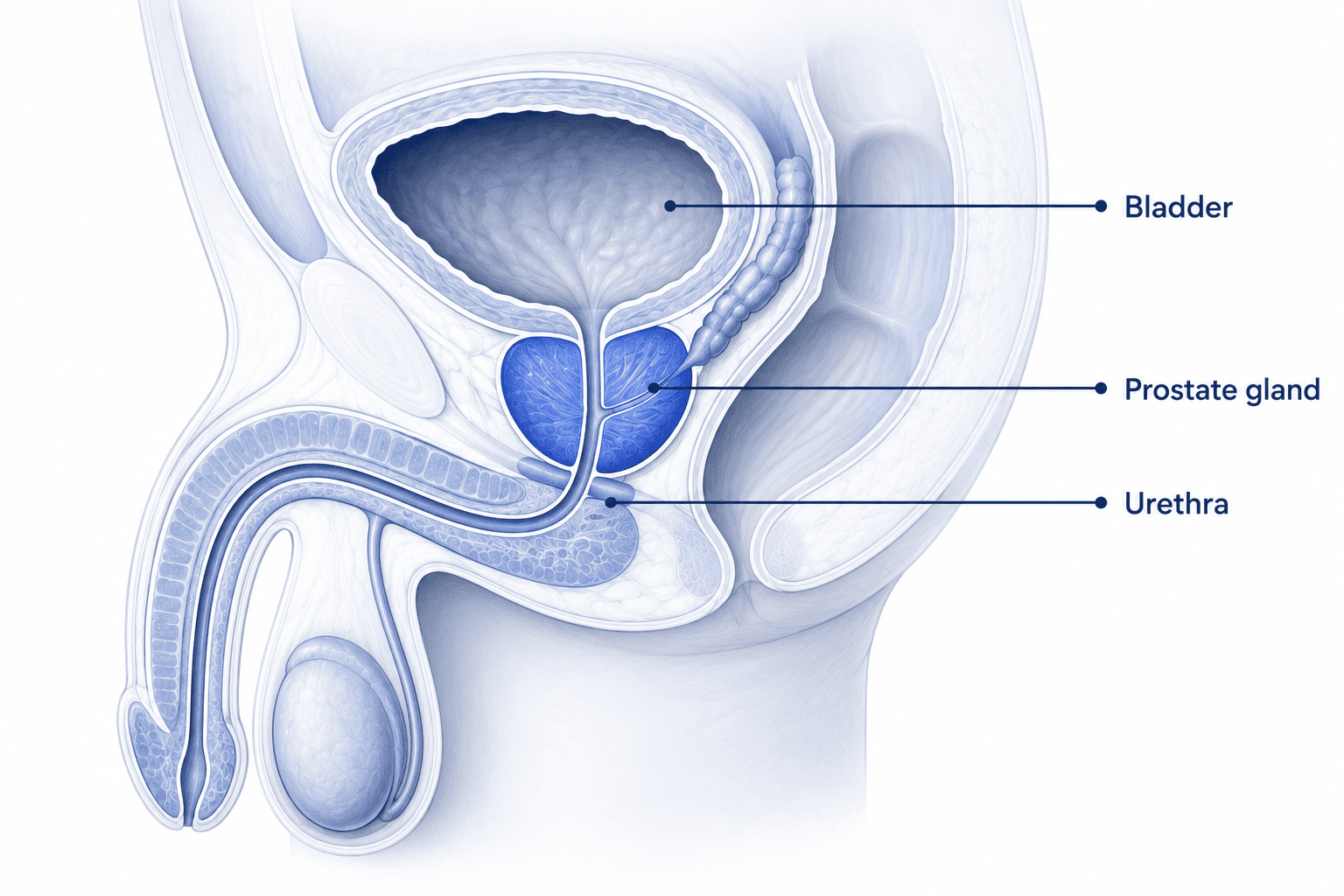
Prostatitis is inflammation of the prostate gland, a small walnut-shaped organ that sits below the bladder and surrounds the urethra. The prostate produces fluid that forms part of semen. When it becomes inflamed, it can cause a range of uncomfortable symptoms including pelvic pain, urinary problems and sometimes painful ejaculation.
Prostatitis can develop suddenly (acute) or persist over a long period (chronic). It can affect men at any age, though it is more common in men under 50. The cause varies significantly depending on the type.
Types of prostatitis and their causes
Prostatitis is classified into four types. Identifying which type you have is the first step to effective treatment.
Acute bacterial prostatitis
This type is caused by a bacterial infection and develops suddenly with severe symptoms. The most common bacteria responsible are E. coli and other organisms from the urinary tract or bowel. The infection typically enters the prostate through the urethra or spreads from a urinary tract infection. Acute bacterial prostatitis is uncommon but requires urgent medical attention — it can become serious quickly if left untreated.
Chronic bacterial prostatitis
Also caused by bacteria, but symptoms develop more gradually and persist for at least three months. The same bacteria are responsible, but they can hide deep within prostate tissue, making the infection harder to clear even with antibiotics. Men with this type often experience recurring UTIs.
Chronic prostatitis/chronic pelvic pain syndrome (CP/CPPS)
This is the most common form of prostatitis, accounting for approximately 90% of all cases. Unlike bacterial forms, CP/CPPS does not appear to be caused by an active infection. The exact cause is not fully understood, but contributing factors include:
- Previous infections that have triggered ongoing inflammation
- Nerve damage or irritation in the pelvic area
- Immune system responses
- Stress and psychological factors
- Pelvic floor muscle tension or dysfunction
- Physical trauma to the pelvic region
The absence of a clear bacterial cause makes CP/CPPS particularly challenging to diagnose and treat.
Asymptomatic inflammatory prostatitis
This type causes no noticeable symptoms and is usually found during tests for other conditions. The cause is unknown and treatment is not usually required unless it is affecting fertility or causing elevated PSA levels.
So what is the most common cause of prostatitis?
When considering all types together, CP/CPPS is by far the most common cause of prostatitis symptoms — responsible for around 9 in 10 cases. However, because CP/CPPS has no single identifiable cause, a thorough specialist assessment is essential to rule out bacterial infection and determine the right treatment approach.
Where an infectious cause is present, bacteria from the urinary tract are the most common culprits. These typically originate from the bowel and enter the urinary system before reaching the prostate.
Risk factors that increase your chances
- A recent bladder infection or UTI, particularly for bacterial forms
- Having a urinary catheter or undergoing procedures involving the urinary tract
- Prostate enlargement, which can trap urine and allow bacteria to thrive
- Dehydration and infrequent urination, allowing bacteria to remain in the urinary tract longer
- Cycling or activities that put sustained pressure on the perineum and prostate
Private Prostate Clinic London
Concerned about prostatitis or pelvic pain symptoms?
Mr Ghei sees men with prostatitis and chronic pelvic pain syndrome privately at The Wellington Hospital, St John’s Wood. Same-week appointments are usually available. No GP referral required.
Recognising the symptoms
Symptoms vary depending on the type but commonly include:
- Difficulty passing urine
- A burning sensation when urinating
- Frequent urination, especially at night
- Pain in the pelvis, groin or lower back
- Painful ejaculation or discomfort in the genital area
If you experience acute symptoms — fever, chills, severe pain or an inability to urinate — seek medical attention immediately. These can indicate acute bacterial prostatitis, which requires urgent treatment.
Getting the right diagnosis
A specialist will typically carry out a physical examination, including a digital rectal examination, to check for tenderness or swelling in the prostate. Urine tests can identify bacterial infections, whilst blood tests may check for elevated PSA levels or signs of infection. In some cases, prostate fluid analysis or imaging may be recommended to rule out other conditions.
The type of prostatitis you have determines the treatment. A correct diagnosis is essential — treating CP/CPPS the same way as bacterial prostatitis will not work.
You can read more about prostatitis and its management on the BAUS (British Association of Urological Surgeons) patient information pages.
If you are based in London and concerned about your prostate health, Mr Maneesh Ghei consults privately at The Wellington Hospital, St John’s Wood. No GP referral is needed and same-week appointments are usually available.
Frequently asked questions
What is the most common cause of prostatitis?
Chronic prostatitis/chronic pelvic pain syndrome (CP/CPPS) accounts for around 90% of all prostatitis cases. It does not have a single identifiable cause — nerve irritation, pelvic floor dysfunction and immune responses are all thought to contribute.
Is prostatitis caused by a sexually transmitted infection?
In some cases, yes. Sexually transmitted bacteria such as chlamydia or gonorrhoea can cause prostatitis, particularly in younger men. This is one reason why urine tests and, where appropriate, STI screening form part of the diagnostic process.
Can prostatitis go away on its own?
Mild cases of CP/CPPS may improve with lifestyle changes such as reducing alcohol, caffeine and cycling. Bacterial prostatitis requires antibiotic treatment and should not be left untreated. If symptoms persist for more than a few weeks, a specialist assessment is advisable.
How long does prostatitis last?
Acute bacterial prostatitis usually resolves within a few weeks with antibiotics. Chronic prostatitis and CP/CPPS can persist for months or longer. Some men respond well to a single course of treatment; others need a longer-term management plan.
Can prostatitis cause a raised PSA level?
Yes. Prostate inflammation can cause a temporary rise in PSA (prostate-specific antigen). If a raised PSA is found on a blood test, your consultant will consider prostatitis as a possible cause before recommending further investigation.
Where can I see a private prostate specialist in London?
Mr Maneesh Ghei is a Consultant Urological Surgeon based at The Wellington Hospital, St John’s Wood. He offers private consultations for prostatitis and all prostate conditions. No GP referral is required and same-week appointments are usually available. You can book via the Urocare London prostate clinic page.
About the Author

Mr Maneesh Ghei, Consultant Urological Surgeon (GMC: 5208045)
Mr Maneesh Ghei is a consultant urological surgeon with NHS and private practice across four London hospitals. He specialises in the diagnosis and management of prostate conditions including BPH, prostatitis and prostate cancer, as well as urinary symptoms, kidney stones and male sexual health. Mr Ghei sees new patients privately with same-week availability. No GP referral is required. Book a prostate screening consultation.